12 Nov are you getting enough fibre?
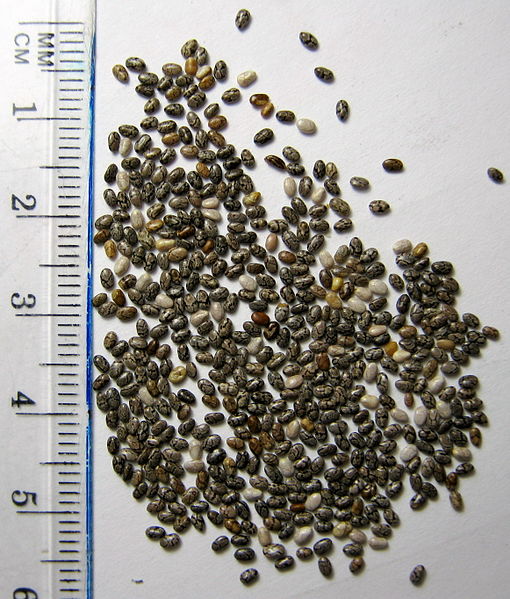
Chia seeds!
Last updated: 22 July 2026
Fibre is also a carbohydrate, it is composed of 10 or more glucose molecules, however, unlike most other digestible polysaccharides (starch being an obvious one), it has beta bonds joining its constituent glucose or other monosaccharide units, and these cannot be broken down in the body. Lactose also has a beta bond between glucose and galactose, but it can be cleaved by the enzyme lactase.
Fibre is important in the body, because it slows the passage of food in the small intestine, and allows the body to extract every molecule of energy from food in the small intestine, where glucose molecules cross the intestinal cell and enter the bloodstream to give us energy, but it speeds up transit in the large intestine, increasing your regularity, and reducing the amount of time that fermentation occurs.
The Dietary Guidelines suggest that women should eat 25 g of fibre per day and men should eat 30 g. It is not only the positive impacts of the movement of digested food through your digestive tracts that has contributed to this recommendation. Sufficient fibre has been linked to a reduction in cancers of the colon and GI (gastrointestinal) tract.
In dose-response analyses of large cohort studies, every additional 7–10 grams of fibre eaten per day was associated with a 9% reduction in cardiovascular disease risk, a 9% reduction in type 2 diabetes risk, a 10% reduction in colorectal cancer risk, and an 11% reduction in all-cause mortality. In Australia, the adequate intake sits at 25 grams a day for women and 30 grams for men, with a higher suggested target of 28 grams for women and 38 grams for men to meaningfully reduce chronic disease risk, yet most Australians fall short of even the lower target, averaging around 21 grams a day for women and 25 grams for men.
In practical terms, that means the fibre goal is best approached through food choices, more legumes, whole grains, vegetables, fruit, nuts and seeds, rather than through a supplement alone.
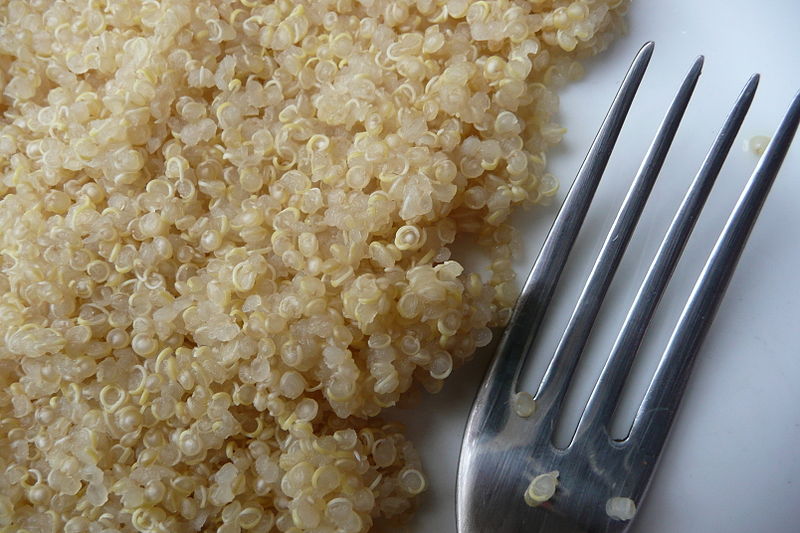
Quinoa!
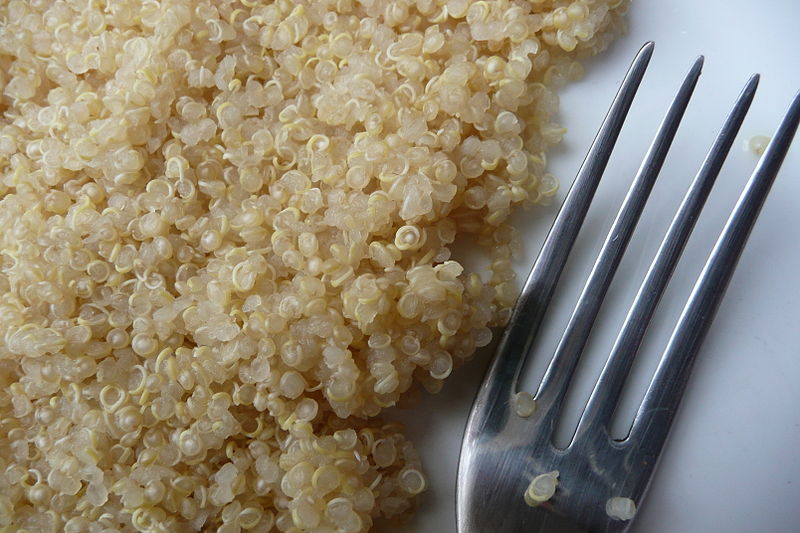
A morning green smoothie contributes 20.3 grams of fibre in one hit, and this is mainly from the psyllium, pineapple and chia seeds. Other high fibre contributors to your daily food are other wholegrains such as cereals and breads, and grains such as quinoa have a whopping 19g per 1/2 cup serve. Perhaps this is why the Dietary Guidelines recommend such large quantities of wholegrains and cereal foods – 5 serves per day.
It is important to increase your fibre intake gradually, since the bacteria in your large intestine, will react to the sudden increase in polysaccharides and make you feel uncomfortable, so be sure to increase your intake gently.
Most of the fibre that we get is in the cellulose component of plant foods, and this compound is composed of long strands of glucose. The beta bonds, makes it indigestible, but it still has important function in your digestion.
So how much fibre do you eat each day?. Are you getting enough?
References:
Eufic, 2023. ‘Recommended daily intake of fibre and fibre-rich foods to help you achieve it’. Eufic. Viewed at < https://www.eufic.org/en/whats-in-food/article/recommended-daily-intake-of-fibre-and-fibre-rich-foods-to-help-you-achieve-it > Accessed 22 July, 2026
Flavia Fayet-Moore et al, 2018, ‘Dietary Fibre Intake in Australia. Paper I: Associations with Demographic, Socio-Economic, and Anthropometric Factors’, Nutrients 2018 May 11;10(5):599. Viewed at < https://pmc.ncbi.nlm.nih.gov/articles/PMC5986479/ > Accessed 22 July, 2026.
Pingback:Why you should be eating blueberries for brain health - My Health Zest
Posted at 19:28h, 17 January[…] At least three servings of whole grains per […]
Pingback:Easy, vegan baked beans - are baked beans good for you? - My Health Zest
Posted at 22:34h, 06 August[…] you can see from the nutrition information, these vegan baked beans contain a lot of fibre, vitamin C, iron and vitamin K, while only containing very low amounts of saturated fat (0.8 g), […]