
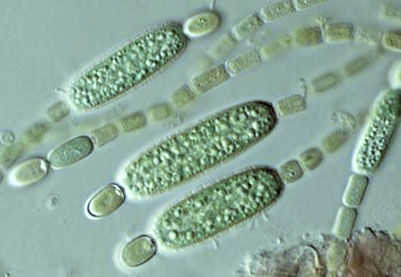
29 Oct Evolution of life from single celled organisms
This morning when I woke up, I wanted to find out more about the evolution of life forms on earth. ‘Where did we come from?’ It is really fascinating reading, and makes me miss studying science. I love my job, but maybe science can be a hobby.
RNA self replication and the development of single celled organisms
Importantly, pre-biotic Earth contained materials that led to the evolution of RNA. The crucial feature of RNA is that it can self-replicate. This is pretty amazing in itself. Although scientists are not 100 % sure about the evolution of DNA, they do think that perhaps self-replication of RNA was achieved through actions in RNA based molecules, called ribosomes.
This incredible process started more than 4.2 billion years ago, and at around this time, single celled life developed. Amazing!! A recent study found that all life evolved from one single celled organism.
Single celled life was thought to develop because of the nature of the hot environment of earth, and the presence of water. The strands of RNA bound amino acids together in polypeptides, and these long molecules, responded to the surface tension of water in an aquatic environment to form circles and rings, called microspheres. These nonliving microspheres functioned as a cell membrane. So, single celled organisms were formed.
One hypothesis about how single celled organisms acquired energy, was that the water environment had a range of molecules, ATP being one of those molecules and the single celled organisms absorbed this energy, through the cell membrane.
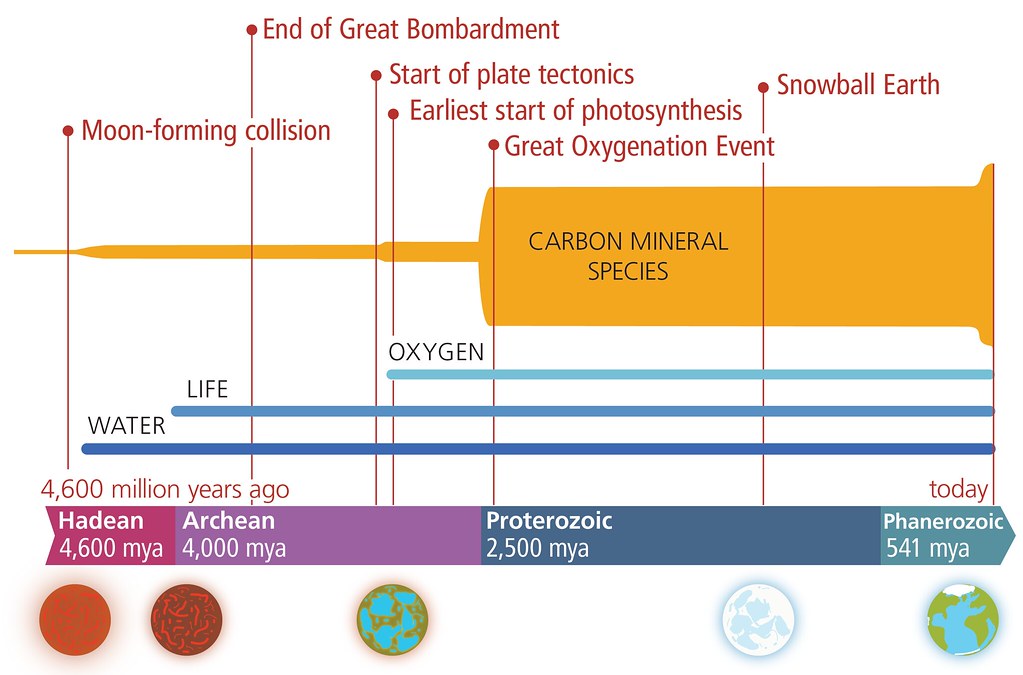
The Great Bombardment hypothesis
Another hypothesis suggests that bacteria arrived to earth in meteors that hit during the ‘great bombardment’. These bacteria were so evolved to withstand the conditions of space travel and then of conditions on planet Earth, which may have been incredibly hostile.
The evidence for this hypothesis is the presence of microorganisms living in some of the most hostile places on earth, such as in water with temperatures of 96 degrees C, or places with extremely high salt concentration, inside rock formations, or in highly acidic environments.
If this hypothesis is true then microorganisms that arrived on meteors were responsible for transforming the hostile environment of Earth and the ultimate generation of oxygen and photosynthesis.
The development of eukaryotes – complex cells that are found in the human body
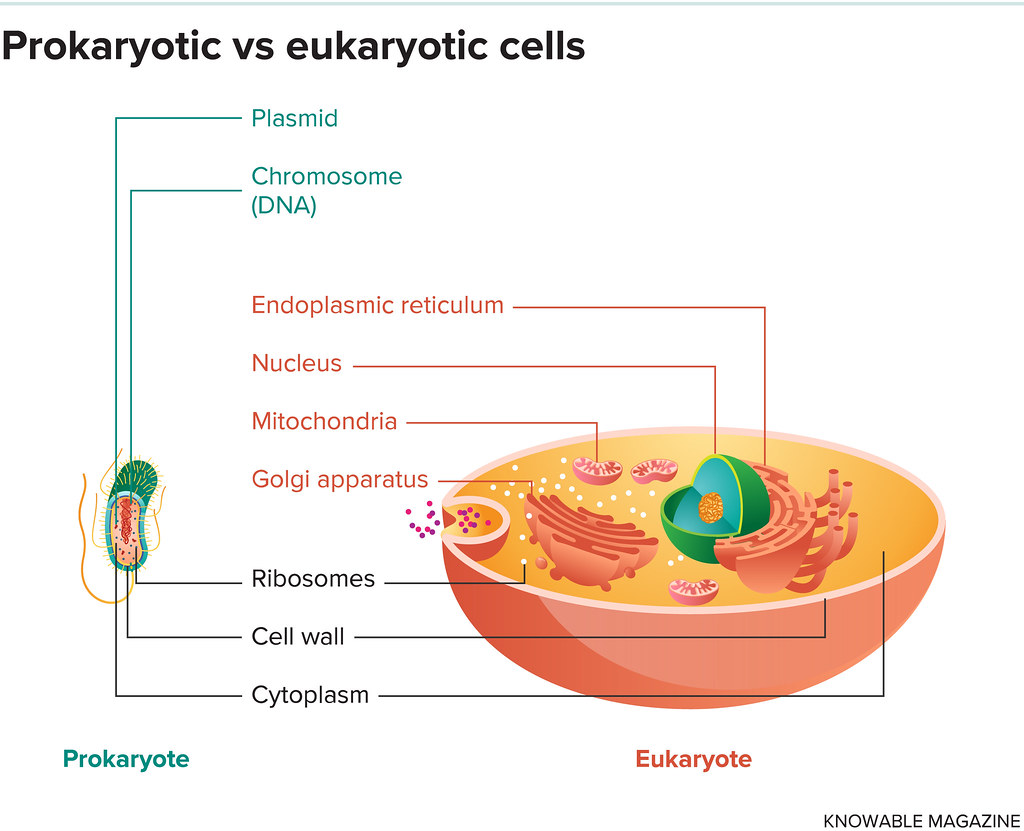
It is hypothesised that good old fashioned symbiosis, led to the development of more complex cell structures. It is thought that eukaryotic cells are the descendants of separate single celled organisms or prokaryotes. These cells worked together in a kind of symbiosis. For example one single celled organism may have ingested another single celled organism for food, and the ingested organism may have stayed within the host organism, providing energy – but also benefiting from the protection of the host organism. Both organisms benefited, so the organism took up permanent residence in the host organism, and eventually evolved into a single lineage. This process is called endosymbiosis. – Understanding Evolution
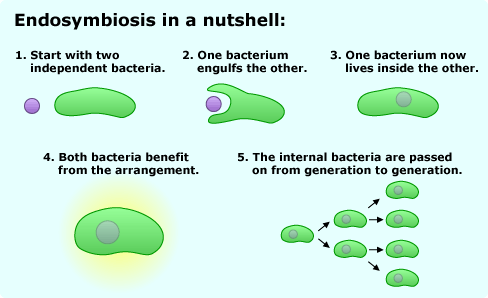
This process led to the development of cells that are complex with a nucleus, cell membrane and mitochondria, as shown in the above diagram. These are the types of cells which make up your body! Amazing, right?!? 2 billion years ago!! What are the chances of that happening?
Human life and evolution
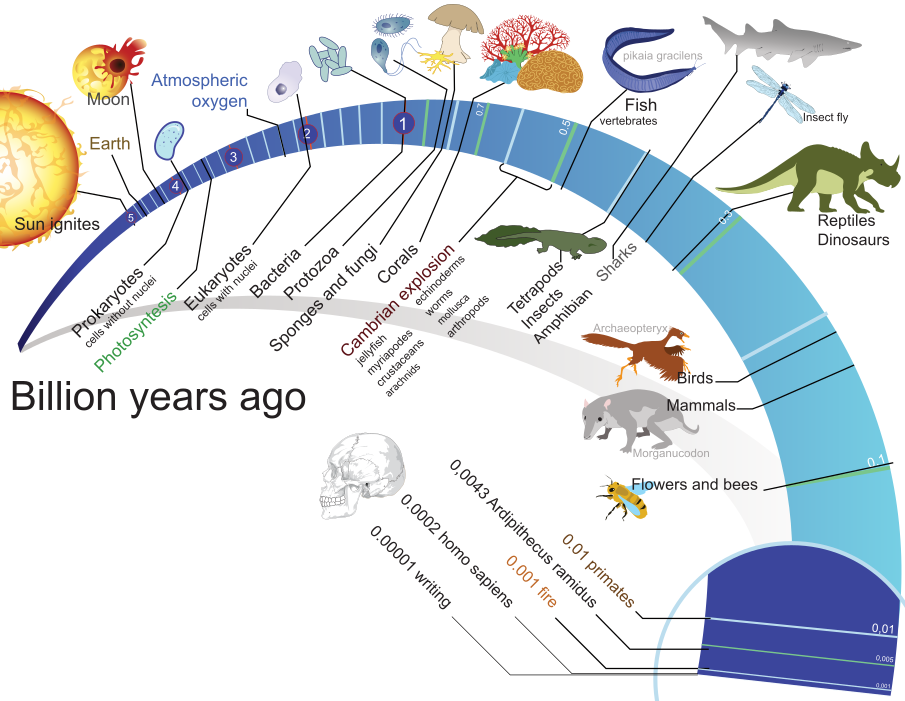
Looking at the first image of the timeline in billions of years ago, it becomes clear that human life is so incredibly recent in the timeline. We may even be a blip in the timeline, given that writing only developed 0.00001 billion years ago and bees and flowers 0.1 billion years ago.
Not to be too negative, but mostly it seems that we humans are devolving rapidly, and/or on a path to wipe ourselves out with climate change, so perhaps we will be another example of the dinosaurs and simply go extinct after a very brief reign of superiority on Earth.
It is probably true that microorganisms such an antibiotic resistant bacteria are more evolved than humans.
Reading about evolution has a way of putting everything in perspective. It makes me think that we are such an insignificant, minor blip on the evolutionary timeline. We may as well enjoy our lives!!
References and related websites
https://www.physicsoftheuniverse.com/topics_life_early.html
https://evolutionfaq.com/faq/how-could-dna-have-evolved
Image credits
“Carbon mineral evolution timeline over 4.5 billion years.” by deepcarbonobservatory is licensed under CC BY-SA 2.0.
“File:Timeline evolution of life.svg” by LadyofHats is marked with CC0 1.0.
“Prokaryotic vs eukaryotic cells” by knowablemag is licensed under CC BY-NC-ND 2.0.
No Comments